Faces of the Folk School - Linda Conroy
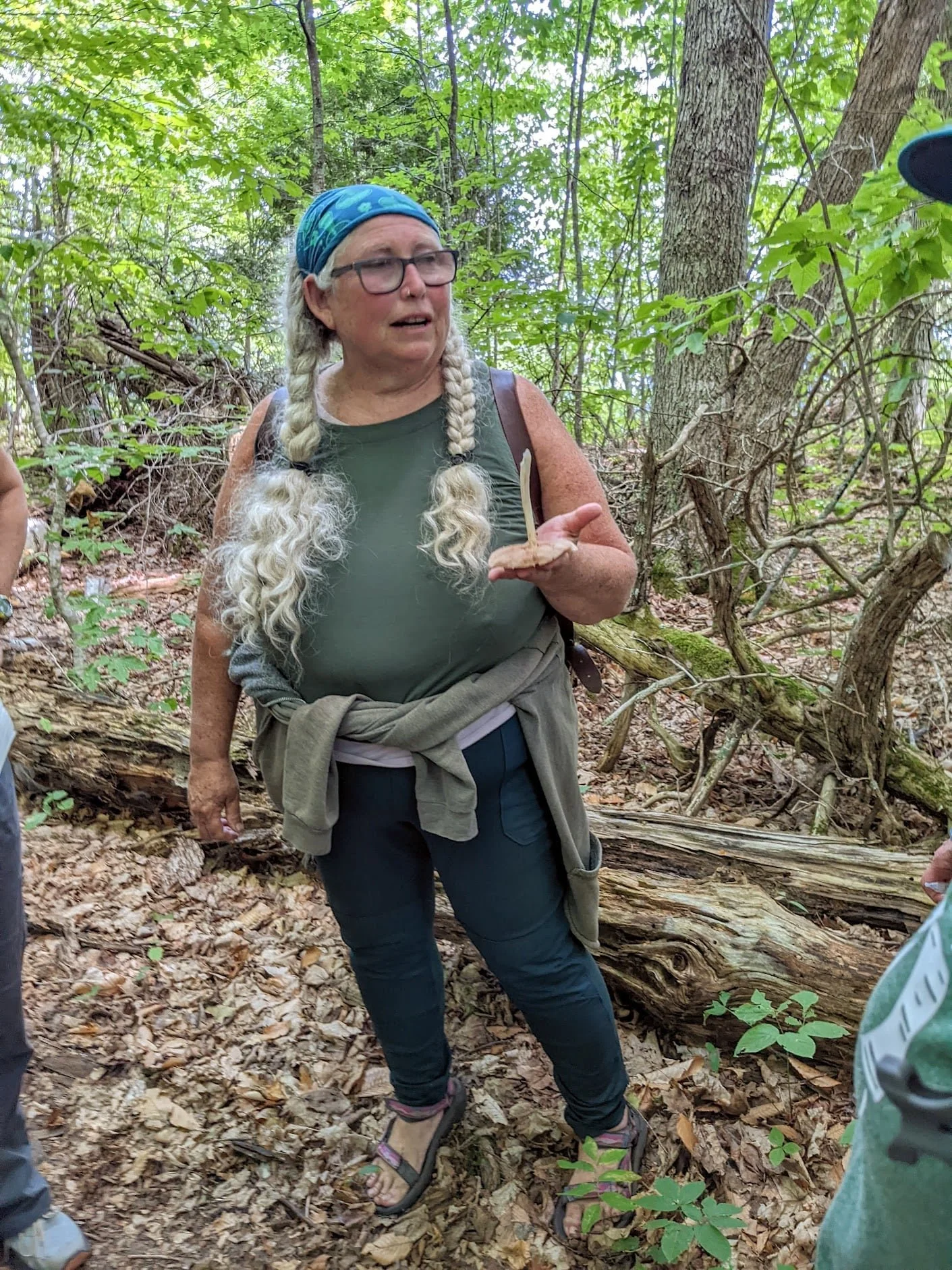
An interview by DFS Fellow, Will Young, with veteran DFS instructor, Linda Conroy, (who has taught for the Driftless Folk School from its inception 20 years ago!) for our Members-Only Newsletter, Field Notes.
Will Young: You are one of the original instructors at the folk school, since its start two decades ago. Can you tell us what it was like to work with the folk school at the very beginning?
Linda Conroy: Yeah, it was really exciting. It was a new endeavor, and it was just really exciting to work with new people with so much enthusiasm for folk education. At that time, all the classes were on people's land, including land I owned in the Driftless, where I had my classes. It was really wonderful to be inviting people in and sharing skills and ideas. It was a seedling, so there was a lot of potential.
WY: How has the Folk School changed over the past twenty years?
LC: Well, the Folk School has had many incarnations. It went from being this place without a center, and then it found a center for a while, and then it shifted and it’s in a decentralized state again. That's one of the things I really appreciate about the Folk School, is that it's had this ability to shift and change as people’s needs change, as resources change. There's been a lot of flexibility and adaptability and resilience within the Folk School. And over time, those changes have become more deliberate. It seems that right now there's a change happening to create more deliberation, and to get more of an anchor. And I love how Jacob [Hundt] has been able to weave different things together to keep the folk school running, because I think the Folk School needs partners. And being a small business person myself who offers a lot of education, the key is always partnerships and relationships.
WY: What about you? How do you think you’ve changed as a teacher over these past twenty years?
LC: I've changed a lot. As a teacher, I always say I learn a lot more than I teach. I teach a lot, but I learn a lot. I'm always responding—again, that flexibility, adaptability and resilience—responding to the needs of the students, responding to the changing time, what people are interested in, how people are learning. I mean, gosh, with my field, the internet really affects how people receive information and how they perceive it. I've had to really shift how I'm presenting the information sometimes, or just helping people to maneuver through information that isn't 100% accurate. So I’ve really had to stay aware of learning styles, of needs, and of what's happening in the broader fields that I'm working in.
WY: Of course, you’ve been a practicing herbalist for much longer than you’ve been teaching here. When did your interest in herbs and herbal medicine begin?
LC: I was in the field of social work, and I always worked in the medical arena, even in my social work days. I became interested in herbs partly from my own health, but also because I saw one of my coworkers who was bringing herbs into her life, and she was really thriving. In my social work, I was working with people with AIDS. And this coworker was living with AIDS, and she was thriving and doing really well, and some of our clients weren't. So then I started learning about herbs for myself. I started for my own health and then it just became something I loved, and the plants kind of drew me in. That particular woman was my first teacher. She mentored me for a long time, and she's still thriving, and she’s still mentoring me. I love it because I'm always learning. I learn something about plants every day. It’s a lifelong endeavor for me.
WY: In which areas are you still learning? What skill or knowledge are you excited to acquire next in the field of herbalism?
LC: When I first started learning about herbs, I thought, I'm going to learn to use herbs in place of drugs and medications. That's what my thinking was, because it's a Western way of thinking about it. It's how we're conditioned. And year after year after year, I get more and more clear that there's a whole other aspect to working with plants, which is relational. It’s about experiencing the plants on their own terms, and seeing the world from their perspectives; being plant-centric rather than person- or ego-centric. I'm learning something about that every day, because it's not easy to undo your conditioning around that kind of thing. Right now, actually, I'm staring at this linden tree that I planted a couple of years ago that’s starting to leaf out. It's leafing out very slowly. It's so interesting because some of the trees leaf out really quickly. And this tree is taking its good old time. I wonder what it is about that tree that makes it move at that slower pace. Looking at the world from a different being's vantage point is really powerful. It opens up this portal to a different kind of experience in life. So it's a mystery, because I'll never know exactly why it's leaving out so slowly, but I'm curious about it.
WY: What is the most valuable lesson you’ve learned from your practice as an herbalist?
LC: I would say trust. I've been doing this for over three decades, and very deliberately. And a lot has happened in my life over that time, just like a lot has happened for the Folk School over that time. I've had a lot of changes and shifts; I've had health things come up, all kinds of things. And no matter what, the plants—I always go back to them. There's a level of process that I have: that the plants are going to catch me in some way. They're going to be there. They're going to have my attention. I'm going to have their attention. Somebody said to me one time when I had health problems about 10 years ago, they said, do you feel like the plants let you down? And I just said, absolutely not. I actually felt the opposite. I feel like they've been there for me. It's like you have a relationship with a being, like how if you have pets, you have a relationship with them that's based on mutual respect and trust. I feel that with the plants really deeply.
WY: What do you hope to see from the Folk School in the future?
LC: Well, I would like to see it, of course, continue to offer new learnings. And I would love to see—this is something I’d love to see more of in the world in general, and I see it in the classes sometimes—more intergenerational experiences. To have a whole spectrum of age ranges together, learning from each other. We can learn from younger people, we can learn from our elders. I love learning from elders at the [Midwest Women’s Herbal Conference]. At the conference, one of my greatest pleasures is spending time at the kids's camp. I'm not even working there, but I always go there. And I often go spend time with the teens, too. We have a teen camp. And, oh, my gosh, those girls, when you watch them bond with each other…so having the Folk School having some element of that that's real deliberate could be really fruitful, I think. And then I love the direction that it's going in getting a home, because I think having a little bit more of an anchor will probably be really helpful to the school. And I love that there's a community event now in July that's becoming a tradition because I think traditions are important. You want lots of change, but you also want some anchors that you keep going back to.
WY: Why does alternative and folk education matter to you?
LC: It's important for a lot of reasons. The biggest thing for me is that it is lifelong learning. That’s what gets instilled in you, rather than academic learning, where you take a test and you move on thinking you've conquered the body of whatever you're studying. In lifelong learning, you're continually getting new insights. You're learning to learn. I was just thinking about this yesterday with my apprentice students. They do a sharing at the end of every season where they bring a dish that they've made and they do a sharing of all the plants they were studying. And I was saying to them, what you're doing is learning to learn. It's not necessarily about the exact information. It’s that you know how to learn. You know how to engage with it. With tests, with memorization, it doesn't get integrated into your being, which is what I think this type of education does. And it enriches the community, it enriches the individual, it enriches families, and you know, it really just enriches everyone.
Want to learn more from Linda? She is teaching two weekend-long intensives this summer: Botany and Sensory Skills for Herbalists and Foragers, from June 20th to June 21st, and Wild Foods, Wild Medicine, from July 18th to July 19th. We hope you’ll join us!
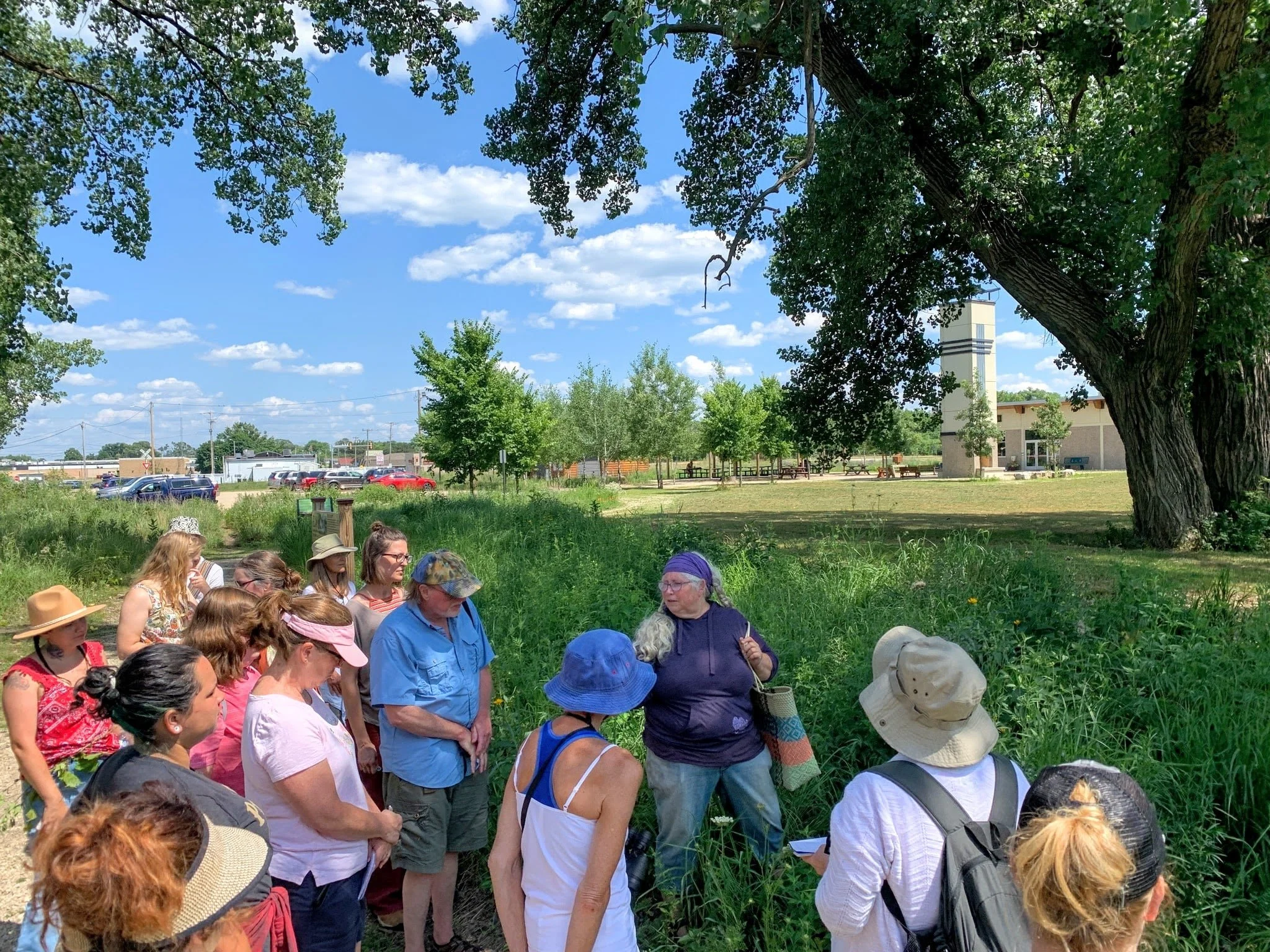

Linda Conroy - Instructor Bio
Linda M. Conroy, MSS, MLSP is a bioregional herbalist, myco-herbalist, traditional food educator, traditional skills educator and a community organizer. She dedicates her life to connecting with the green world and sharing the earth's wisdom. Her primary mentors are the plants who never cease to instill a sense of awe in her daily life. Linda has a certificate in permaculture design, which she completed through the International Earth Activist Program, has studied with Isla Burgess of the International College of herbal medicine and has been a student of compassionate nonviolent communication for over 30 years. Linda has participated in the doula training through the Seattle School of Midwifery and the Midwifery Assistant Program through The Farm Midwives in Tennessee. In addition, she is trained as a Wilderness First Responder. For close to 3 decades, Linda has presented well-received programs and apprenticeship programs. She is the creator of the ever popular Wild Eats Community Meals, Moonwise Herbs, The Midwest Women's Herbal Conference, Mycelium Mysteries Women's Mushroom Conference as well as Women's Wellness Series. Participants in programs as well as events produced and facilitated by Linda walk away with an appreciation for the natural world. Her programs inspire people to incorporate plants, mushrooms and traditional skills into their daily life. Linda is a vibrant, passionate woman who continually seeks to deepen her connection to the green world!
To find out more about Linda's work, visit www.moonwiseherbs.com and www.midwestwomensherbal.com