Faces of the Folk School - Jacob Hundt
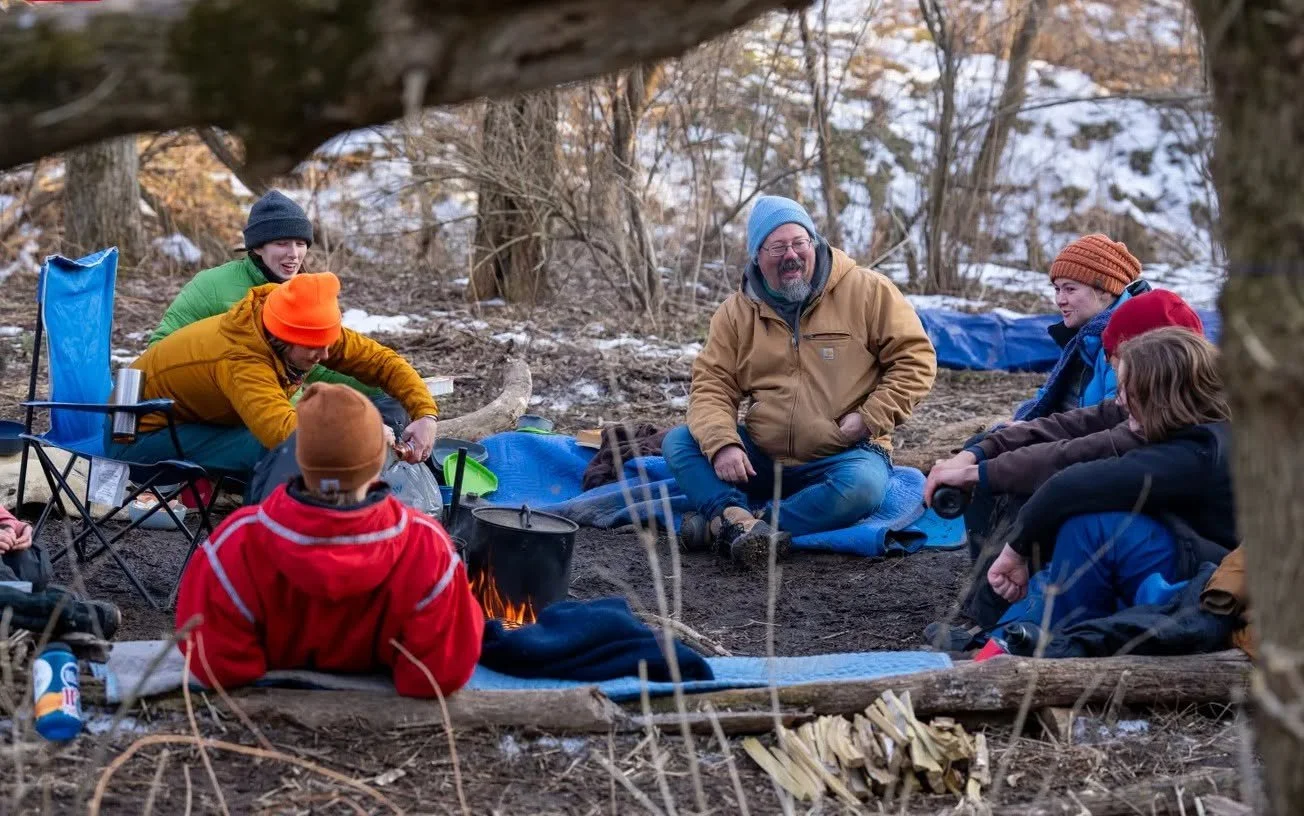
An interview by DFS Fellow, Will Young, with Jacob Hundt (Driftless Folk School and Thoreau College Executive Director) for our Members-Only Newsletter, Field Notes.
Will Young: As the Folk School’s director, you’ve been here since the beginning. Can you tell me about what it was like to be a part of the conversation when it was still mostly a concept?
Jacob Hundt: Well, the founding of things is my comfort zone. So, when things get established, then that’s a new territory. I hope to experience that someday. But to set the scene, a key event in my life was starting Youth Initiative High School. Then I went to an experimental college, to Deep Springs. Even the college I went to in Bulgaria was also kind of a startup, in a weird way. Then I came home, and I really wanted to live here, and I wanted to be a teacher. I was teaching high school, but I really wanted to work with college students. And so, obviously, I decided to start a college. But the first thing that really came along were people, including Dan Pepper, who wanted to start a folk school, which I had never heard of. But the craft and homesteading element was very interesting to me and I liked the mixture of the dynamics there, the vision that was being formed. Creating something with a bunch of interesting people is also my comfort and happy space, right? We had to give a vision, to define our goals, to figure out logistics and where things would happen and how to make a schedule, the nuts and bolts of how to create a nonprofit organization... The other thing about things that I have done is they generally move pretty quickly from concept to some form of action. With the Driftless Folk School is that we met for the first time in January of 2006, and then the first actual classes were in June of 2006. Aside from some minor changes, the form of the Driftless Folk School in that very first installment was almost the same as it is now. One session classes, dispersed in people's homes, with a largely volunteer group of people who are carrying it. I think people like Linda (Conroy) and Nicholas (WazeeGale) were teaching within the first year.
WY: What was the first class you taught like?
JH: The very first class (at the Folk School) was taught by me and Sofya [Jacob’s wife] together. It was a sourdough bread class, and it happened in the same room where all the meetings had been happening, which was in the kitchen-slash-living room of Dan Pepper and Ruth Kittleson. Sourdough was something I’d learned about at Deep Springs; we had a sourdough class, and we captured sourdough cultures and learned about that. And, this was before sourdough was cool. The pandemic was far in the future. But really the experience of capturing a wild culture and using it to make this amazing kind of bread was so fun. I came home from Deep Springs with the culture, which I still have. I used it there, I baked bread at the cow camp there, in a wooden stove up at 9,000 feet. Then it lived in my mom’s fridge for a few years, while I was living in Europe, but after I moved back here, Sofya couldn’t work at first, so she was baking bread in our apartment oven and I was selling out of Youth Initiative (High School). And then Lars Bergen [Jacob’s cousin] had the idea of starting the Driftless Cafe. It was originally going to be the Driftless Cafe and Sofya’s Sourdough, actually. Then, about a month before the Cafe opened, Sofya got pregnant and the smell of baking bread made her throw up! So during the first few months of the cafe, I was the baker. It was fun, but totally exhausting; the hours were really wacky, but it was very successful. People were crazy about it. But I remember one day, coming out of the cafe after work, bleary eyed, and there was Dan Pepper, and he said, “I hear you’re interested in starting a school!” So that was actually the moment we started talking about the folk school. And the first set of classes were things that the people in the room for those initial conversations knew how to do, and so Sofya and I did a sourdough class.
WY: What have been some unexpected developments in the evolution of the Folk School, between its initial conception with Dan Pepper, and today?
JH: Well, initially, there was a vision of a campus, or rather a neighborhood in the town of Liberty Pole. The main site would be Dan Pepper’s house, and then down the road was Adrienne Lyndon, another founder of the Folk School. So the idea was to take people down the road in a wagon with draft horses to have lunch; Adrienne would prepare lunch and she would also be doing childcare. All told, that happened maybe two or three times. That vision [of a centralized campus] never quite worked out in a consistent place. We had blacksmithing way out in Hillsboro, and pretty quickly classes were happening all over. There is something distinctive, I think, about the Driftless region, which is decentralized. Everyone has their special place where they’ve built their special thing, and it’s hard to centralize anything. And that's okay. That’s kind of the character here.
I would also say, it’s amazing to think of what’s happened in the last twenty years in terms of technology. For the first decade or so, I was doing a lot of the management of the website, the booking system, and the publications. We would send out a physically printed catalog once or twice a year, which I would make in Word. That definitely reduced my life expectancy by some amount. Today, that feels so crude, we might as well be carving it in wood. And we didn’t have a great booking system. We’d send out these catalogs, and there would be a place where people could fill out the registration form and send it back in the mail.
WY: I bet there’s a category of people today who would actually find that really charming.
JH: Now it’s coming around, right? Maybe we can bring it back. Send it off to the Luddites, if we can find their email…
WY: The Folk School celebrates its twenty year anniversary this year. What do you most look forward to in the next twenty years?
JH: I think one of the big moments that changed things was the merger with Thoreau College. I think that’s been a huge success; the folk school now has a much more stable leadership and management structure, it now has this amazing staff, and the Folk School Circle has been a really core part as well. So I’m excited to build on that institutional foundation. In the next couple of years, I would love to see an expanded kids’ program. We’re already working on building that. And, the development of a campus site for certain activities that we aren’t able to do very well right now. I think it would also be great to have a dedicated program coordinator. There’s literally a dozen ideas I’m carrying around, or that come up in the Folk School Circle, for things we could do if someone just had some time.
READ: Edible Madison Feature | Driftless Folk School Turns Twenty
WY: I’d like to turn to the wider world of folk education. I know you make it a priority to stay connected and in dialogue with the growing folk school movement, both in America and abroad. For the layperson reader, can you talk a little bit about that?
JH: It’s a very diverse category, things that get called a folk school. The movement traces its roots to Denmark in the 1800s, where it continues to be an important cultural institution, what they call their folk high schools. What a folk high school is in Denmark, and also in other Scandinavian countries, looks a lot more like Thoreau College rather than the Driftless Folk School—which makes our project unique and interesting, in that we’re doing both versions of a “folk school.” But in Scandinavia, folk schools are residential programs, largely meant as a transitional experience for young adults. Sometimes it includes craft, sometimes outdoor education, sometimes sports, theater, music, philosophy, but fundamentally, it’s young people, living together and becoming adults. So that is a global movement, and we’re a part of that. It’s also present in Japan, in Korea, as well as other parts of the world. In North America, for a complex set of historical reasons, folk schools started to focus on regional crafts, particularly in Appalachia to begin with, and then to a degree it expanded to encompass Scandinavian-based craft and culture in the Midwest. I think it was that people were looking for their roots in American culture. Folk schools became associated with folk music and folk arts. So that is now its own movement; several dozen institutions, in some way, are calling themselves folk schools or consciously relating to folk education of this kind. And there are other craft schools, where people teach fine woodworking or glasswork or things like that. The Folk School Alliance and the Folk Education Association of America have made a clear emphasis: what brings folk schools together is an emphasis on building relationships and building community. So insofar as they’re doing all these things—craft, nature skills, homesteading skills—they are doing it to the end of building community between people. And that’s a distinction from just teaching people fine arts, which is great, but it’s a different thing. And that is the overarching quality: All of these programs, including the Danish folk high schools, the North American folk schools, they are all about building relationships among people.
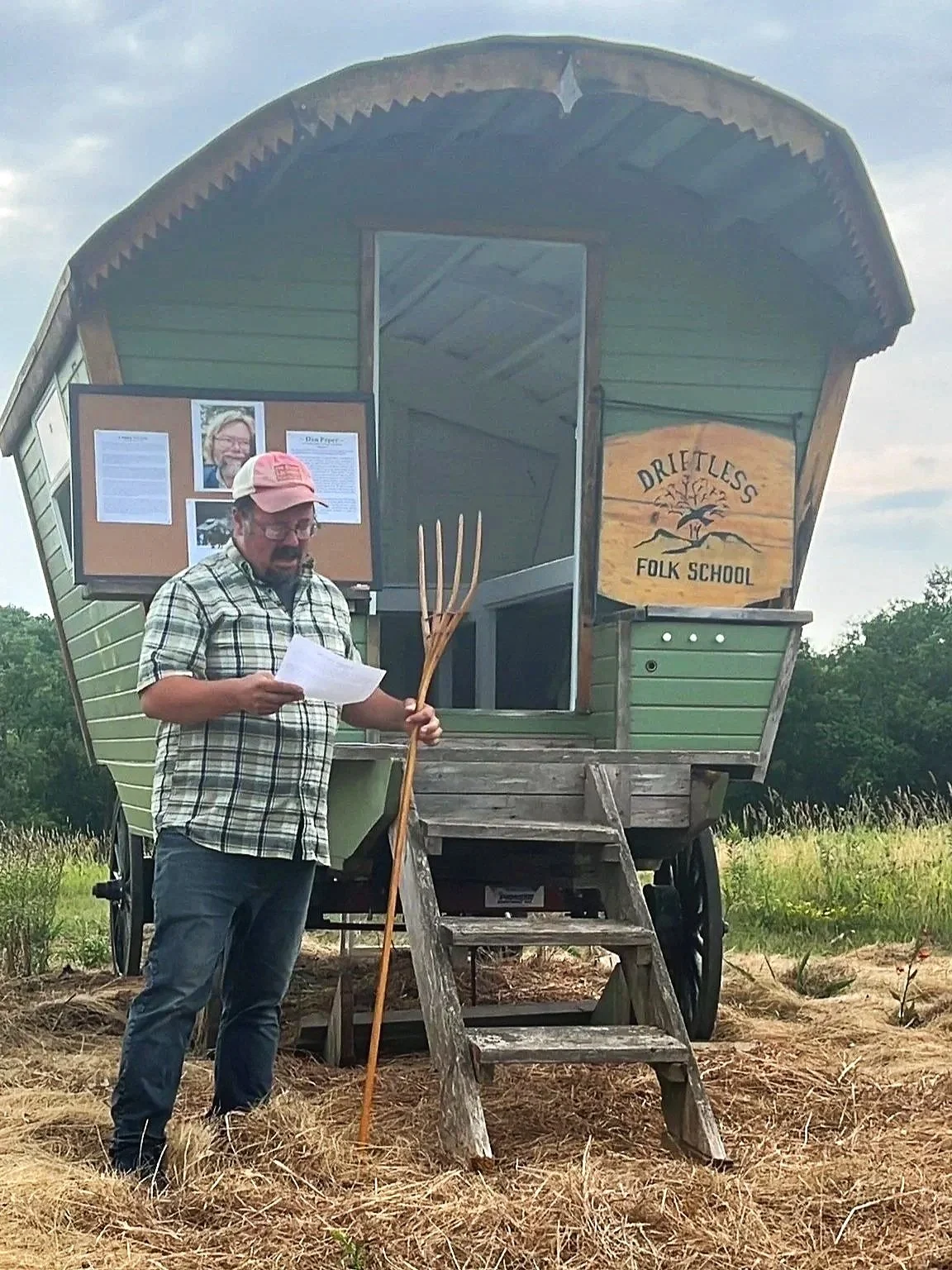
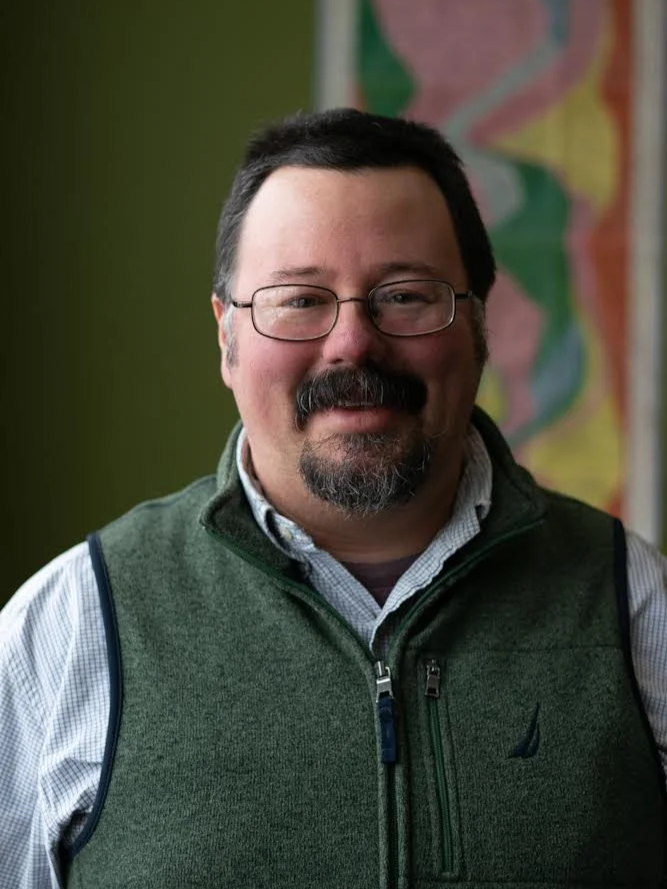
Jacob Hundt’s Bio —
Jacob Hundt grew up on a dairy farm in the Driftless Region and was one of the founding students of the Youth Initiative High School in Viroqua. He studied at Deep Springs College, the American University in Bulgaria, and the University of Chicago. Since 2004, he has worked as a trained Waldorf high school teacher and guidance counselor at Youth Initiative High School and was a founding board member and instructor of the Driftless Folk School.
Currently, Jacob is Director and faculty member of Thoreau College, an emerging microcollege inspired by Waldorf education, Henry David Thoreau, Deep Springs College, and the Scandinavian folk high school movement. He lives on a 10 acre farm near Viroqua with his wife Sofya and 4 children.
Contact email: jacob@driftlessfolkschool.org